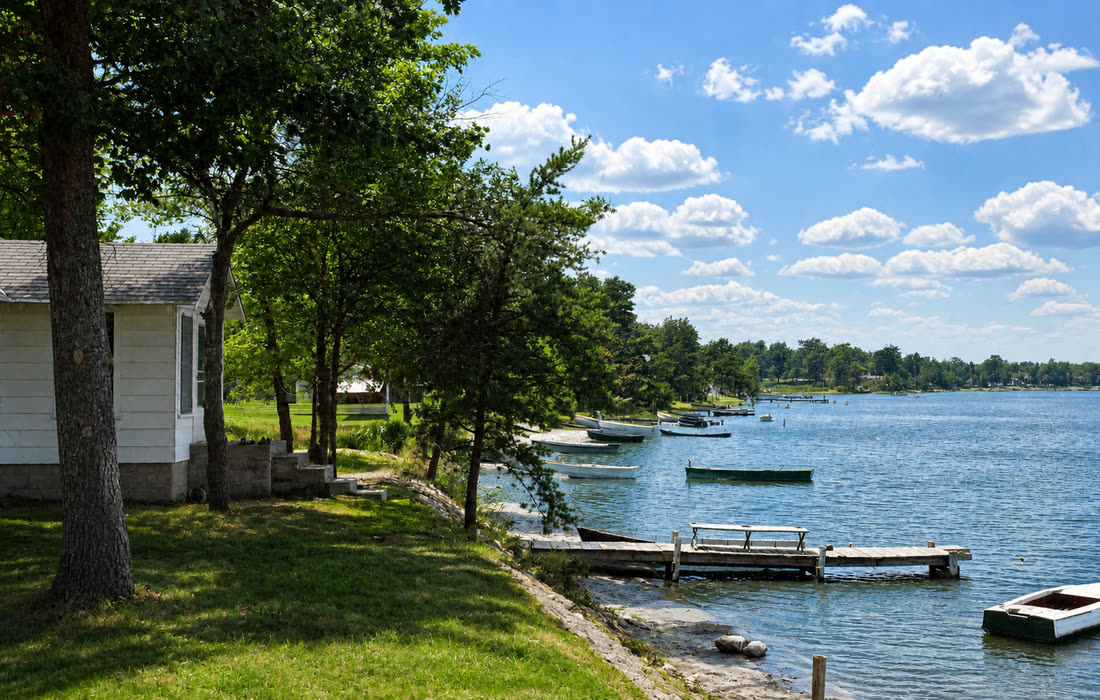
Grant Township, Iosco County, Michigan
A Community Shaped by Timber, Inland Settlement, and Rural Persistence
Before 1880 — From Wilderness to Township Lands
Grant Township developed as part of the inland expansion of Iosco County, which was formally organized in 1857 under the leadership of lumberman Gideon O. Whittemore, founder of nearby Tawas City.
Before settlement, the area that would become Grant Township was a heavily forested interior, lying west of the Lake Huron shoreline communities of Tawas City and East Tawas. The land was dominated by pine and hardwood forests, with natural features such as Indian Lake and smaller inland wetlands shaping early travel routes.
Early activity came from lumber surveyors and timber cruisers moving inland from the Au Sable River and Tawas Bay regions, where logging had already begun in the 1860s.
1880–1900 — Lumber Camps, Rail Lines, and Early Settlements
Permanent settlement began in the late 19th century as logging expanded inland.
Two early communities emerged within what is now Grant Township:
Ogemaw — established around 1877, with a post office serving lumber camps and early settlers
Edson — a sawmill-based settlement tied directly to timber cutting operations
These communities were typical of the lumber era—temporary but active, centered on sawmills, boarding houses, and supply depots.
Logging rail lines and rough haul roads connected these inland camps to larger lumber centers such as Au Sable and Oscoda. Workers and early settlers often moved between camps, creating a fluid population.
As timber was cleared, homesteaders began settling cutover land along routes that would later become roads such as Indian Lake Road and Sand Lake Road. Farming was difficult, but families persisted.
1900–1920 — Fires, Decline of Lumber, and the Rise of Farming
By the early 1900s, most of the merchantable pine was gone. Lumber camps closed, and settlements like Edson faded quickly.
The devastating 1911 forest fires, which destroyed much of the Au Sable and Oscoda region, also affected inland areas and marked the final end of large-scale lumbering in Iosco County.
Grant Township transitioned into a farming community:
Former logging lands became small farms
Families cleared land for crops and livestock
Rural schools began appearing to serve scattered populations
The community of Ogemaw declined but remained part of local identity and historical memory.
1920–1940 — Rural Communities and Named Places Take Root
During this period, Grant Township stabilized as an agricultural district.
Important geographic and settlement features included:
Indian Lake — a focal point for both farming and early recreation
Sand Lake — a developing inland community area that would later become a census-designated place
Scattered farmsteads along emerging road networks
Families—many descended from lumber workers—established permanent roots. While specific early settler names are less formally recorded at the township level, regional families tied to Iosco County’s growth included those connected to lumber firms such as Smith, Van Valkenburg & Company, who had shaped the broader county economy.
One-room schoolhouses and churches became the backbone of community life.
1940–1960 — War Influence and Modern Infrastructure
Following World War II, Grant Township began to modernize:
Rural electrification expanded across farm properties
Roads connecting to Oscoda, Au Sable, and Tawas City improved
Farm equipment replaced earlier manual and horse-powered labor
While nearby Oscoda grew rapidly due to Wurtsmith Air Force Base, Grant Township remained primarily agricultural and residential.
Indian Lake and surrounding lands began attracting seasonal visitors for hunting and fishing.
1960–1980 — Recreation and the Emergence of Sand Lake
Outdoor recreation became increasingly important:
Hunting camps and seasonal cabins developed
Snowmobiling and fishing drew visitors inland
The Sand Lake area grew as a recognizable residential and recreational community
Grant Township remained rural but became more connected to the broader tourism economy of Iosco County.
1980–2000 — Residential Growth and Changing Population
By the late 20th century, Grant Township evolved into a mixed community:
Long-standing farm families
Retirees relocating from southern Michigan
Seasonal residents with cabins near Indian Lake and Sand Lake
Improved roads and access to nearby towns made year-round living more practical.
The township’s population reached approximately 1,500 residents by the end of the century.
2000–2020 — Planning, Identity, and Preservation
In the early 21st century, Grant Township focused on maintaining its rural character while adapting to growth:
Development of zoning and planning efforts
Continued growth around Sand Lake
Preservation of farmland and wooded areas
The township remained closely tied to nearby service centers such as Oscoda and Tawas City, while retaining its independence.
2020–Present — A Living Inland Legacy
Today, Grant Township is defined by:
Its quiet rural landscape
Lakes such as Indian Lake and Sand Lake
A blend of permanent and seasonal residents
With a population of approximately 1,528, the township reflects steady continuity rather than rapid change.
Modern leadership, including township officials and community members, continues to guide development while preserving the area’s history and natural environment.
Legacy of Grant Township
Grant Township tells the inland story of Iosco County:
From the lumber camps of Ogemaw and Edson
To the farms carved out of cutover forest
To today’s quiet residential and recreational community
Though it never developed large cities or industry, its strength lies in persistence—families, land, and local identity enduring across generations.
← Back to all histories