Sherman Township, Iosco County, Michigan
A Community History from Settlement to the Present
1860–1880 | First Settlement and Organization (1877)
Sherman Township’s story begins in the dense pine forests of southern Iosco County. In 1865, the first known Euro-American settlers—primarily lumbermen from Bay City—entered the area to harvest its vast white pine stands. Logging camps quickly appeared along rough trails that would later become roads such as Whittemore Road and National City Road, forming the earliest transportation corridors. These early crews were transient, but they established the economic foundation of the township.
By October 15, 1877, Sherman Township was formally organized, carved out of Tawas Township, alongside neighboring townships such as Reno and Baldwin. The township was named during a period when Civil War figures influenced local naming traditions, reflecting the broader post-war American identity shaping Michigan’s frontier communities.
1880–1900 | Railroads, Emery Junction, and Early Growth
The arrival of the railroad transformed Sherman Township from isolated logging camps into a connected settlement. In 1884, a flag stop known as Emery Junction was established along the Bay City & Alpena Railroad, later tied into the Detroit & Mackinac Railway system.
This junction became the nucleus of what would later be National City, the township’s primary community. Key early figures included Quincy Martin, who became the first postmaster when the Emery Junction post office opened in 1904, marking the shift from a rail stop to a permanent settlement. Small sawmills operated throughout the township, and timber was shipped out by rail to larger markets.
Boarding houses, blacksmith shops, and supply depots followed the tracks, serving both workers and early farming families beginning to clear cut-over land.
1900–1920 | From Timber to Farming Communities
As the great pine forests were depleted, Sherman Township transitioned into a farming region. Families settled permanently on former logging lands, raising livestock and cultivating hay, potatoes, and grain.
Rural schools appeared at crossroads locations, and churches—often shared among denominations—became the social centers of the township. Though small, these institutions anchored community life.
The township’s location between Whittemore and Tawas City allowed residents access to markets, mills, and county services while maintaining a distinctly rural character.
1920–1940 | The Rise of Industry and National City
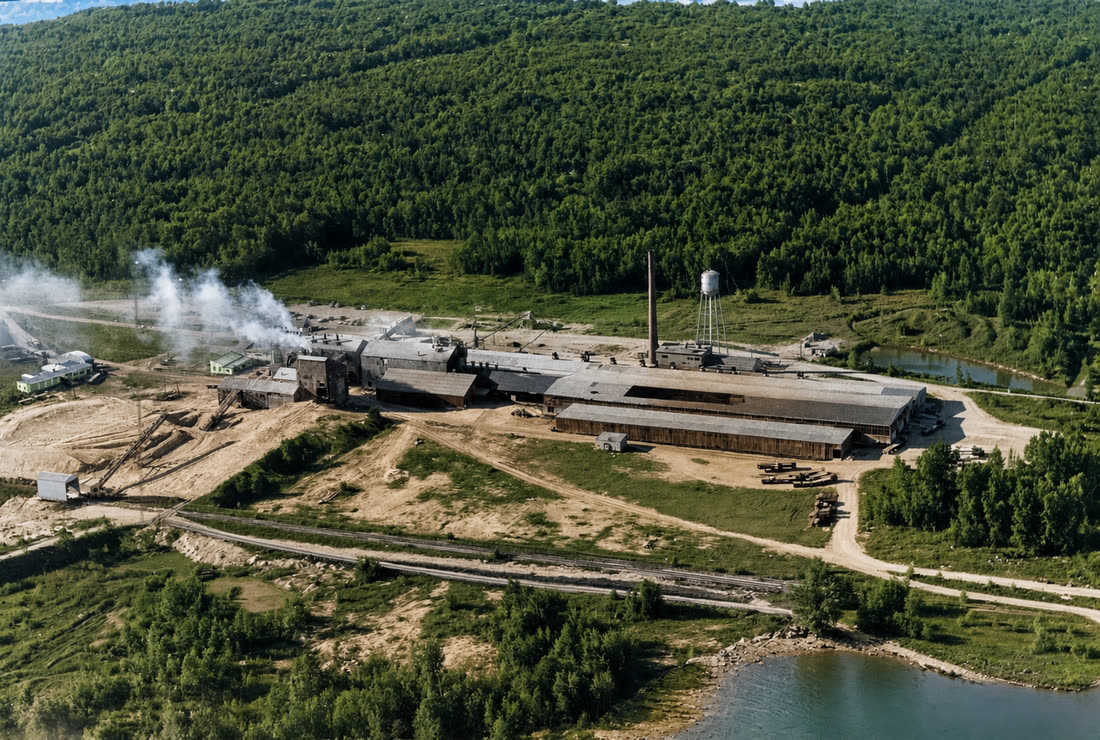
A major turning point came in 1925, when the National Gypsum Company opened a quarry near National City. This operation shifted the township’s economy from purely agricultural to a mix of farming and industrial extraction. In 1926, the Emery Junction post office was officially renamed National City, reflecting the influence of the gypsum industry. The quarry and associated operations provided steady employment during a period when many rural Michigan communities struggled.
Trucking routes expanded, replacing rail as the primary method of hauling materials. Despite the Great Depression, Sherman Township endured through a combination of subsistence farming, quarry employment, and strong family networks.
1940–1960 | War Years and Rural Stability
During World War II, many township residents left for military service or industrial jobs in larger Michigan cities. Those who remained supported wartime production through agriculture and resource extraction. After the war, Sherman Township settled into a pattern familiar across rural northern Michigan:
Small family farms
Local businesses in National City, including a garage, store, and post office
Increasing automobile travel connecting residents to nearby towns
Electricity and improved roads gradually modernized the township, though it retained its quiet, agricultural identity.
1960–1980 | Decline of Small Farms and Forest Influence
By the 1960s and 1970s, small-scale farming began to decline. Younger generations moved to urban centers, and many farms were consolidated or abandoned. At the same time, the surrounding Ogemaw State Forest and nearby public lands began to define the township’s identity. Outdoor recreation—hunting, fishing, and seasonal cabins—grew in importance. Sherman Township increasingly became a place not only to live, but to retreat.
1980–2000 | A Quiet Rural Community
Through the late 20th century, Sherman Township remained sparsely populated, with fewer than 500 residents. Key characteristics included growth of seasonal homes and recreational properties, continued quarrying and related industries nearby, and reliance on Whittemore and Tawas City for schools and commerce. National City persisted as the township’s focal point, maintaining essential services despite its small size.
2000–2020 | Preservation and Rural Identity
Entering the 21st century, Sherman Township embraced its identity as a rural, low-density community. With a population of just over 400 residents by 2020, it remained one of the least populated townships in Iosco County. Local governance, centered at the township hall on Rhodes Road, focused on zoning and land use, road maintenance, and preserving the township’s rural character.
The surrounding forests, proximity to Lake Huron, and quiet landscape continued to attract seasonal residents and outdoor enthusiasts.
2020–Present | Continuity in a Changing Region
Today, Sherman Township stands much as it has for decades: a rural community shaped by its logging origins, sustained by agriculture, quarrying, and recreation, and anchored by National City and its historic transportation roots.
While nearby areas have seen development, Sherman Township has remained intentionally unchanged—valuing open land, natural resources, and a slower pace of life. Its history is one of adaptation—from pine forests to farms, from railroads to highways, and from industry to recreation—while maintaining a strong sense of place within Iosco County.
Key Historical Anchors
1865 – First lumber camps established
1877 – Township officially organized
1884 – Emery Junction railroad stop established
1925 – National Gypsum quarry opens
1926 – National City officially named
2000s – Continued rural preservation and low population
← Back to all histories